Wildlife Calendar Artists


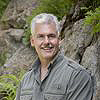
Carl Brenders
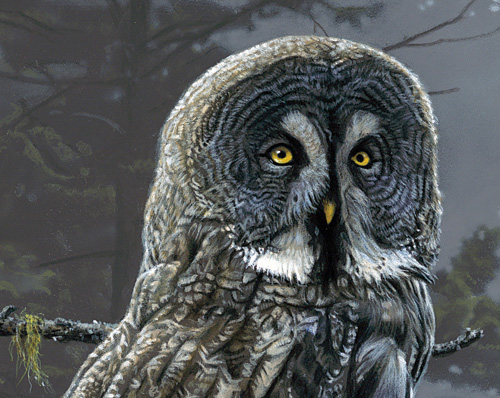
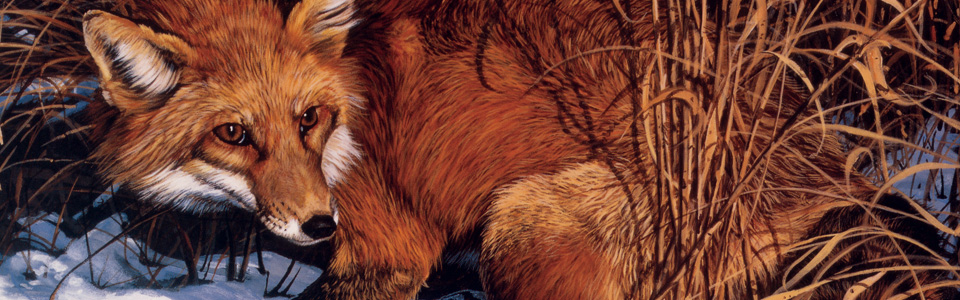
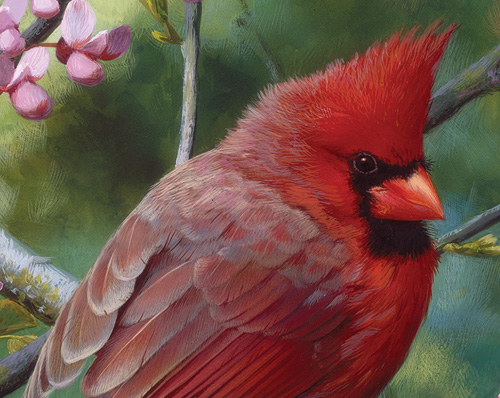
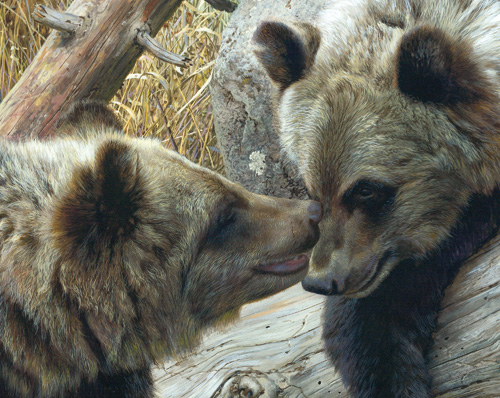
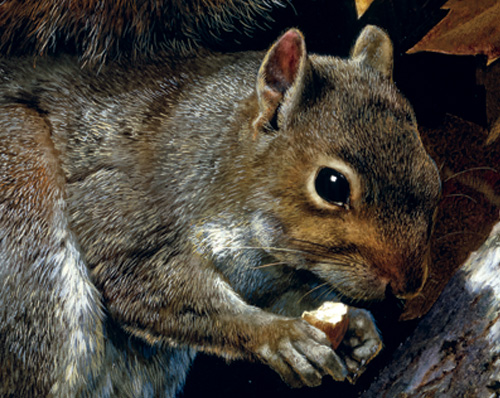
Carl Brenders is an internationally recognized wildlife painter known for his exceptionally faithful and powerful rendition of nature. Nature in all its diversity is Carl Brenders’s one and only inspiration. No subject is too humble or noble for him. He will paint with equal love and focus a cluster of ladybugs, a clutch of ducklings, a fox, a pride of lions or a small patch of lichen growing on a branch. Capturing nature’s wildlife in all its beauty and drama imparts Carl’s work with considerable and captivating variety. The meticulously detailed paintings, so striking in their tactile realism, express the artist’s philosophy that nature is perfect: “This is why I paint the way I do with so much detail and so much realism – I want to capture that perfection.”
The powerful renditions of wildlife in all its spectrum, the mastery of details and the tactile realism Carl creates in his paintings irresistibly draw in the viewers, confronting them to a close encounter with an elusive and, sometimes, dangerous animal. Such vivid emotion caused by the artist’s capture of nature explains the popularity of Carl Brenders with the public and his stature in the art world.
Through the publication of magnificent prints of most of his works by his publisher, Mill Pond Press Companies of Venice, FL, Carl’s wildlife paintings have been made available to a wide public in North America but also .in Europe as well as Japan and Argentina. Carl can be seen in the Mill Pond Press video: Windows into Wilderness: A portrait of Carl Brenders.
Art publications have featured Carl Brenders in books such as More Wildlife Paintings Techniques of Modern Masters (Watson-Guptill Publications, 1996) and The Best of Wildlife Art (North Light Books, 1997), Wild: The Amazing World of Wild Animals (Harvest House Publishers, 2004). His art is also the focus of Wildlife: The Nature paintings of Carl Brenders (Harry N. Abrams, 1994), Song of Creation (Baker Books, 2000), and Pride of Place: The Art of Carl Brenders (Langford Press, UK 2007).
The deep respect and admiration Carl feels towards nature and its wildlife not only manifests itself in his works but also in his staunch defense of the environment in a world that has become more and more hostile to animals and vegetation. The passionate plea he enters in the statement he wrote for his Endangered Ambassadors, a rendition of two Bengal tiger cubs, is particularly moving and speaks of his commitment to the preservation of the environment. Carl, the artist, is also a fervent naturalist and environmentalist.
Featured Artwork:
Bruce Miller
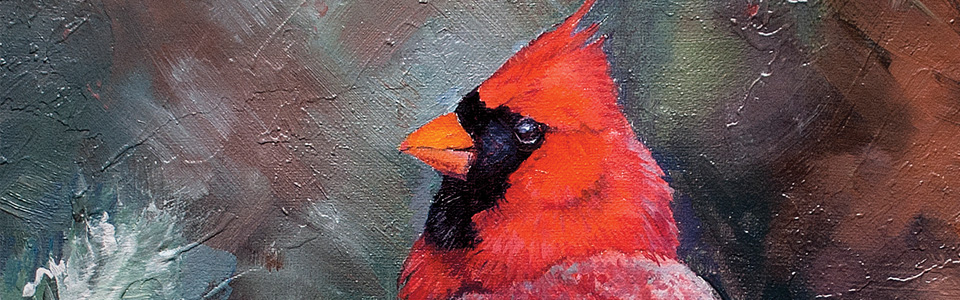
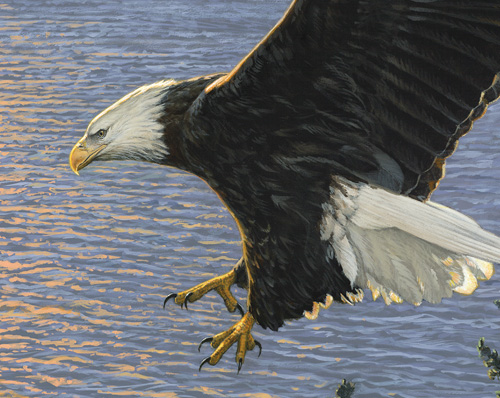
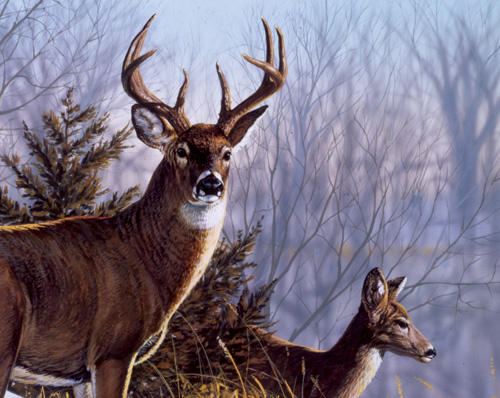
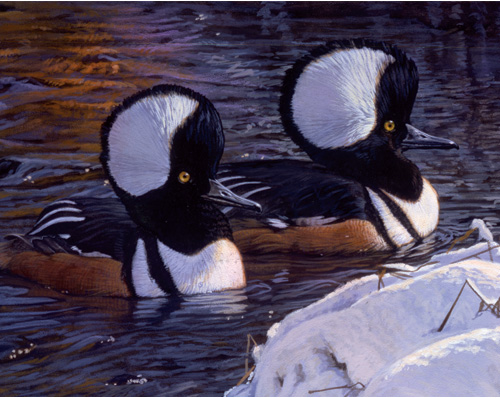
Born in Minneapolis in 1952, Bruce Miller showed signs of artistic talent at an early age. Given a set of acrylic paints for seventh grade art class, he painted exclusively with acrylics until 1999, when he began painting with oils.
After high school, Bruce majored in art at St. Cloud State University and expanded his horizons as a world traveler. He returned to Minnesota to seriously pursue his art career in 1975. Miller experimented with a variety of genres including portraits, landscape, abstract and surrealism. Being an avid outdoorsman and Eagle Scout, in 1981 he began painting wildlife.
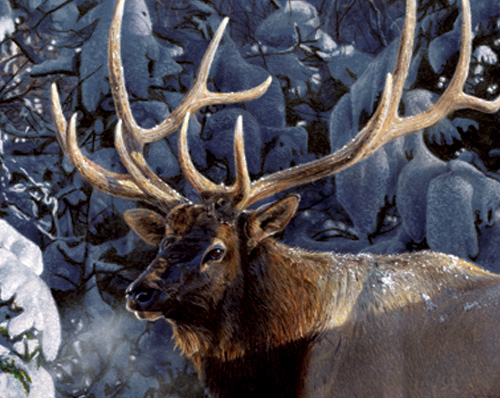
In 1988 he won his first national contest, Artist of the Year for the Michigan Wildlife Art Festival and since has won over 50 awards and been featured at several major art shows in the country. He has won 23 conservation stamps including the 1993 Federal Duck Stamp and recently the 2015 Texas Duck Stamp. And was named the 1999 Ducks Unlimited International Artist of the Year, The National Wild Turkey Federation Artist of the Year 2008 and the Rocky Mountain Elk Foundation Artist of the Year in 2002 and 2011. Miller’s work has generated over $10,000,000 for conservation. Conservation of wetlands being paramount in his life.
In 1999, Miller was moved by some art he saw at The Museum of Russian Art in Minneapolis. He decided to switch to oil and attempt to paint in a more impressionistic manner. His work continues to evolve after years of intense study.
The city of his residence during the Federal Duck Stamp win in 1993 showed their appreciation for one of their own by dedicating a wildlife preserve, in Bruce’s name.
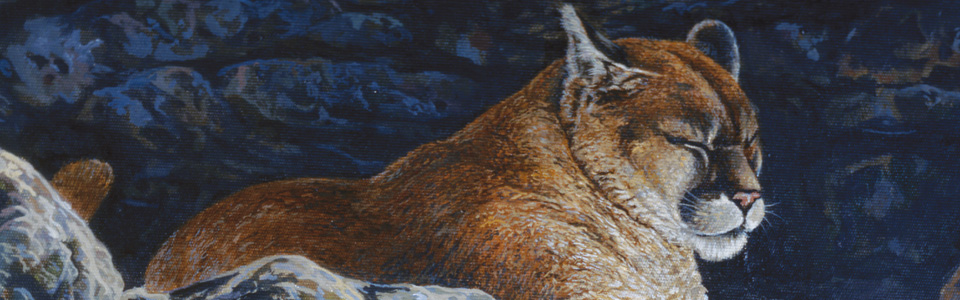
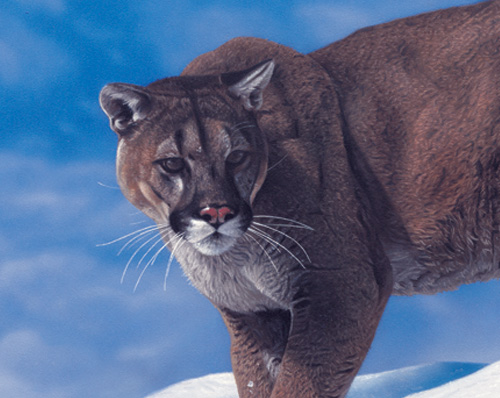
He was especially moved in 2012 by a once in a lifetime exhibit of Nicolai Fechin at the Museum of Russian Art in Minneapolis. You will see the influence in his chicken portraits and cougar painting. He continues to evolve as all art does. And he continues to experiment with expressionistic techniques.
His passions outside of art are bird hunting, duck hunting, and fly fishing. He will fly fish for anything he can, but his favorite sport is doing a canoe float and fly fishing for smallmouth bass with popper flies.
Featured Artwork:
Adam Smith
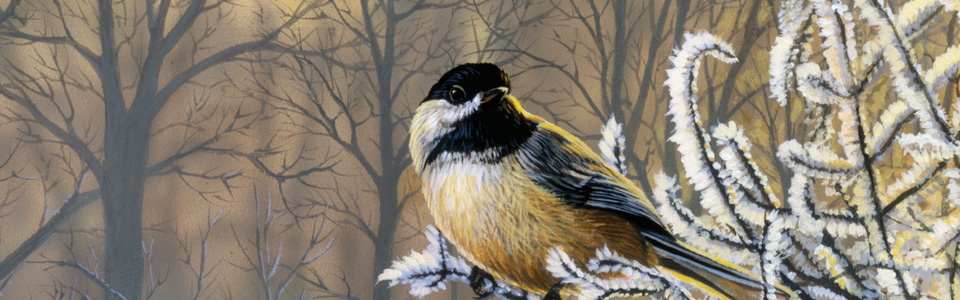
Adam Smith was born in Minnesota in 1984 and moved to Montana when he was nine years old. Raised in a family immersed in the wildlife art world, Adam was nurtured on nature. “We always had a variety of animals in and around our house from ducks, rabbits, parrots and iguanas to the more domestic horses and dogs. Life was never dull (or quiet) around our house.” Smith says, “Nature was just a part of who we were as a family.”
Adam’s entry into the arts began when he picked up the guitar. At 14, he showed exceptional talent and was asked to make guest appearances with two local bands. He had developed quite a following and amazed the crowd. During a family cruise trip to the Caribbean, Adam was asked to join the band on board the cruise ship.
His guitar gave way to the paint brush when he was 16. Adam decided he wanted to learn how to paint and subsequently entered the Montana Junior Duck Stamp competition. His first entry in 2001 placed first and that was the beginning and the end of his duck stamp career. He put away his paint brushes and turned his full attention to cars.
Adam’s interest in cars took him to Laramie, WY where he attended WyoTech and graduated in the top of his class. Recruited by two of the most desirable automobile companies, Adam turned them down to stay in Bozeman. He wasn’t ready to leave Montana and was not sure if he was truly following his passion.
In 2006 Adam picked up the paintbrush once again and found that passion. Daniel Smith remarks about Adam’s natural abilities and minimal experience, “Many people assume that I taught Adam how to paint or that he picked it up by watching me work throughout his twenty-two years. The fact is his talent is innate. I did not teach him how to paint. About a year ago he painted a small portrait of an African lion to see if he could paint fur. When he presented me with the finished work, I was shocked because it looked like I painted it. Adam has a gift, and I look forward to watching him grow and develop as an artist. We plan to take many reference trips together and share a bond that goes beyond the typical father and son relationship.”
Featured Artwork:
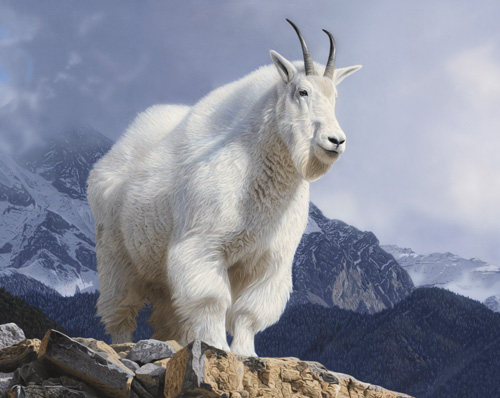
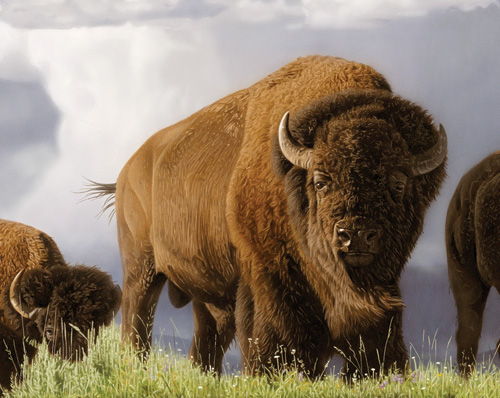
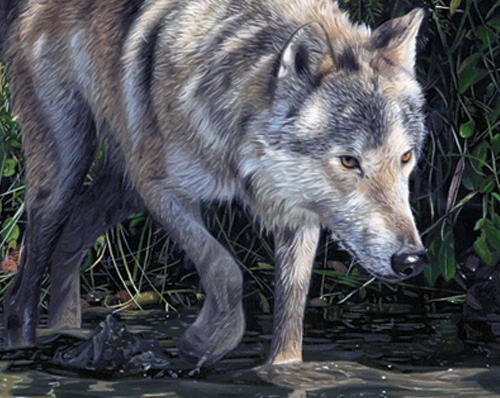
Daniel Smith
1980–2020
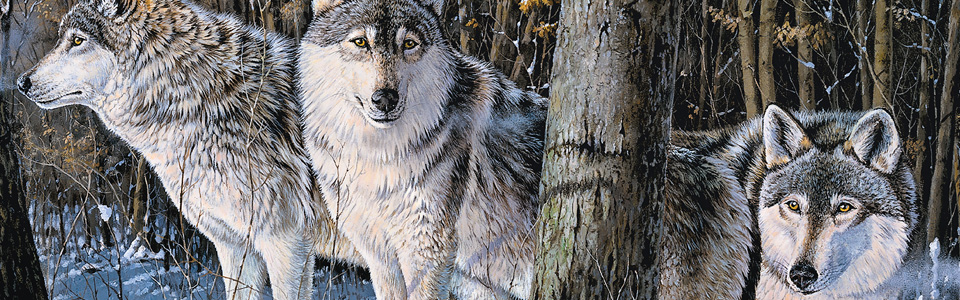
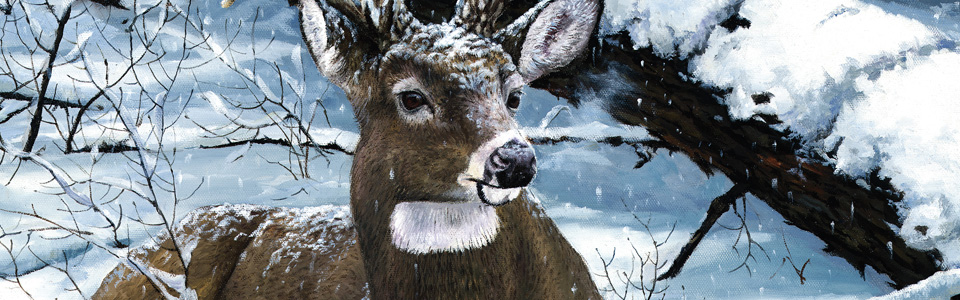
Daniel Smith, one of America’s foremost nature artists, enjoys wide acclaim for his spectacular depictions of landscape and wildlife.
Born in Minnesota and now residing in Bozeman, Montana where the rugged peaks of the Gallatin Range are the only thing separating him from Yellowstone National Park, he is inspired by his surroundings. One of the most rewarding and inspiring elements of his work is the fieldwork. It is the genesis of all his paintings. Smith is passionate about his subjects and travels frequently seeking artistic inspiration.
Smith has been painting full time for over twenty years and has had over 100 of his paintings reproduced as limited-edition prints. He began his career designing conservation stamps. He has designed over thirty stamps including the 1988–89 Federal Duck Stamp and was recently selected as Ducks Unlimited International Artist of the Year for the second time.
Smith has won numerous awards from the Society of Animal Artists and has been chosen Artist of the Year for several conservation organizations. Smith has used his art to aid and endorse many conservation efforts. He received the 2009 Harrison Eiteljorg Museum Purchase Award, the 2007 Artist of Distinction award from the Eiteljorg Museum and the 2008 People’s Choice Award at Western Visions. He exhibits at several museum shows including the Autry National Center, the Eiteljorg Museum, the National Cowboy & Western Heritage Museum and the Leigh Yawkey Woodson Art Museum.
The detail and scientific accuracy of Smith’s art caught the eyes of organizations such as the National Geographic Society, who commissioned him to paint five color plates for “The Field Guide to the Birds of North America”, and the prestigious “Birds in Art” exhibition sponsored by the Leigh Yawkey Woodson Art Museum. In 1996 he was inducted into the “U.S. Art Hall of Fame” due to his great popularity among print collectors.
Smith travels frequently to research his subjects in their natural habitat. He believes there is no substitute for personal experience in the field. He has had a lifetime fascination with Africa saying, “The primal strife between predator and prey makes me feel like I have stepped back in time. It is like no other ecosystem in the world.”
Smith is also an ardent supporter of wildlife conservation. He feels indebted to the natural world that has provided him with the sole inspiration for his award-winning career.
Featured Artwork: